Textiles & interiors
How St Genève Balances Merino and Luxury Fiber in a Bedding Throw
A considered blend of superfine Merino wool and cashmere gives the Freya Throw its particular character: warm but not ponderous, richly textured yet easy to place. Its Lithuanian-woven herringbone and softly finished fringe make a case for the quiet power of construction in a bedroom layer.
A throw has a small but persuasive role in a room. It may rest folded across the foot of a bed, fall casually over a chair, or be reached for when the evening turns cool. Its appeal is tactile, certainly, but the first impression of softness is only part of the story. Fiber blend, yarn, weave, weight and finishing all shape how a textile hangs, feels and performs over time.
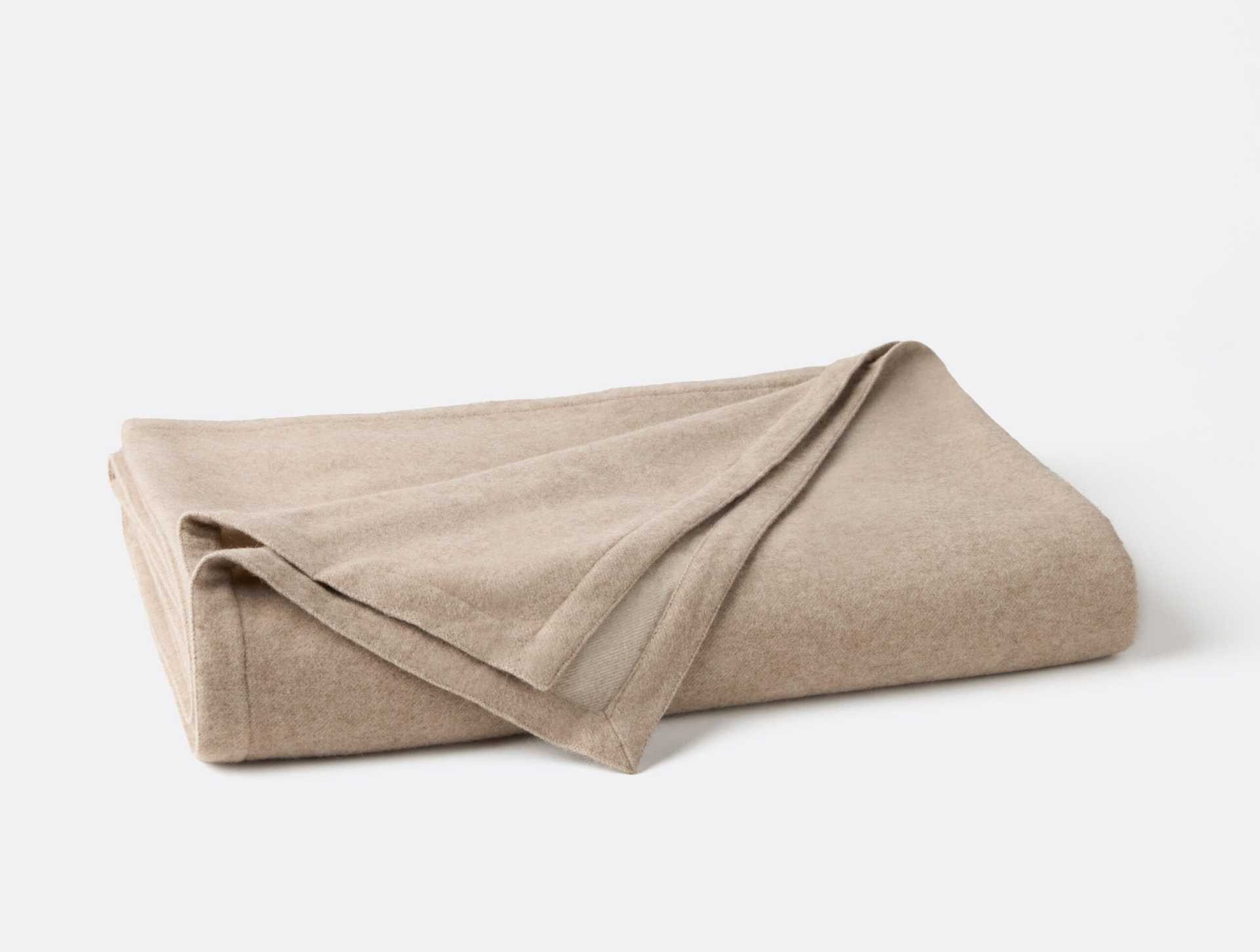
The St Genève Freya Throw offers a particularly clear example. Woven in Lithuania from 75% superfine Merino wool and 25% cashmere, it brings together a wool-rich foundation and a smaller proportion of a celebrated luxury fiber. A delicate herringbone weave lends quiet pattern, while fringe softens the edges. The result is not simply a story of cashmere softness, but of how different fibers and making choices can work together.
Looking closely at this composition is useful for anyone interested in bedding textiles, from a design-minded reader choosing a layer for home to students exploring material culture. It also invites a broader question: what does a fiber blend actually tell us, and what remains to be understood from the fabric itself?
The logic of a wool-rich blend
Merino is a breed of sheep whose fleece is valued for its fine fibers. In textiles, fine wool is often associated with a softer hand than coarser wool, though the finished feel depends on many factors: fiber diameter, yarn preparation, spinning, finishing and the way the cloth is constructed. “Superfine” signals a fineness category, but it is not, on its own, a complete description of a fabric’s performance or handle.
Cashmere comes from the soft undercoat of cashmere goats. It is prized for its fine, supple feel and insulating qualities, and its production involves specialized collection and processing. A 25% share in the Freya blend gives cashmere a meaningful presence without making it the majority fiber. Merino accounts for the remaining 75%, establishing the dominant character of the material composition.
That balance is worth noticing. A blend is not necessarily a compromise between a “better” fiber and a lesser one. It is a design decision: a way to bring distinct material qualities into a single textile. Wool can contribute resilience, warmth and structure; cashmere can bring a soft, refined hand. How those qualities are perceived depends on the actual yarns and weave, rather than a percentage alone.
Nor does a blend guarantee a particular sensation for every person. Skin sensitivity, room temperature, expectations and personal preference all matter. “Soft” is an experience as much as a technical description. The best way to understand a throw is to consider its material details alongside its weight, surface and intended setting.
Warmth without visual or physical heaviness
Natural animal fibers are often valued for their ability to trap air within and between fibers, supporting insulation. In a throw, the experience of warmth is shaped not only by fiber type but by fabric density, thickness, weave, and how the textile is used. A light layer may provide welcome comfort in a cool bedroom without the bulk of a heavier blanket, while a more substantial fabric can feel reassuring during colder months.
The Freya Throw is described as offering warmth without weight. That phrase points to a useful distinction: warmth and heaviness are related in some textiles, but they are not interchangeable. A fabric can feel insulating without feeling cumbersome. For a bed, this can make a throw especially versatile. It can be added over a duvet for an extra layer, folded at the foot for easy reach, or used as a shoulder wrap while reading.
Its role is different from that of a duvet or a mattress covering. A throw is generally an adaptable accent layer rather than the main bedding system. That flexibility makes it possible to adjust comfort through the day and across seasons without changing the entire bed. It also gives the textile a visible design function: the fold, drape and surface become part of the room’s composition.
In practice, the best placement depends on the room and routine. At the foot of a bed, a throw can add a final line of texture and provide an extra layer when needed. Draped over a chair, it makes a reading corner feel considered and ready to use. Folded neatly, it lets the herringbone structure and fringe read as details rather than visual clutter.
Herringbone: a pattern made by structure
The Freya’s delicate herringbone weave offers a restrained alternative to a bold motif. Named for its resemblance to the bones of a fish, herringbone is formed by arranging diagonal lines in alternating directions. The resulting pattern has movement and rhythm, but it can remain subtle, especially when the yarn colour is consistent and the contrast is low.
Unlike a printed pattern, a woven design is built into the cloth’s structure. The surface can catch light differently across the changing diagonals, producing a sense of depth that shifts as the fabric bends or drapes. This quality makes herringbone a useful design choice in interiors: it can enliven a quiet palette without demanding the attention of a large-scale print.
On a throw, the weave influences more than appearance. Construction affects how a textile falls, how it responds to handling and how its surface presents itself. Still, the word “herringbone” alone cannot tell us the fabric’s precise density, weight or durability. Those depend on the particulars of yarn and manufacture. It is most useful as one piece of a larger description, read alongside fiber content, origin and care guidance.
For bedrooms, this understated geometry pairs naturally with plain bedding, textured linen or other quiet patterns. It can provide a point of visual interest without competing with the larger shapes of a bed and headboard. In a layered room, that sort of subtlety often proves more enduring than an accent chosen only for immediate impact.
Fringe and the language of finishing
Finishing details give a textile its final character. On the Freya Throw, fringe decorates the edges, adding a softer outline to the structured geometry of the herringbone. It introduces a small element of movement: the edge looks less formal than a sharply bound finish, while the woven body retains a composed, tailored quality.
Fringe is also a practical detail to understand when considering care and use. Any loose or decorative edge may benefit from gentle handling and storage that avoids snagging. This does not mean the feature is fragile by definition; rather, it is a reminder that finishing affects how an object should be treated. A throw intended for everyday use still deserves care appropriate to its materials and construction.
The product information recommends dry cleaning. That guidance matters because it sets expectations for maintenance. Wool and cashmere are natural fibers whose texture and dimensions can be affected by heat, agitation and unsuitable detergents. When a care label recommends professional cleaning, home laundering should not be assumed to be an equivalent alternative. Following the stated instructions is one of the simplest ways to help preserve a textile’s appearance.
Lithuanian weaving and the importance of origin
The Freya Throw is woven in Lithuania, a detail that situates its making without, by itself, telling the entire story of its supply chain. Country of manufacture identifies an important stage in a product’s journey, but it does not automatically reveal where every fiber was sourced, how it was processed, or what working conditions shaped production. Responsible interpretation means appreciating the information provided while avoiding assumptions beyond it.
Textiles connect distant stages of work: animal husbandry, fiber collection, sorting, cleaning, spinning, dyeing, weaving and finishing. Each step can influence the final cloth. In a blended textile, those stages may involve more than one material stream. Clear information about origin and processing helps readers understand this complexity and encourages brands and retailers to communicate with precision.
For a reader interested in the culture and sustainability of cashmere, the broader context matters too. Cashmere is associated with pastoral livelihoods in regions including Mongolia and China, among others, and its supply chains can be geographically extensive. The circumstances of production vary, so general claims about the environmental or social character of all cashmere are rarely adequate. Specific sourcing information, traceability and credible standards are more informative than a luxury label alone.
Likewise, a manufacturing location should be understood as one fact, not a complete ethical endorsement. A thoughtful account distinguishes what is known—such as the stated fiber percentages and weaving location—from what would require further documentation. This measured approach respects both the people and landscapes involved in textile production and the reader seeking reliable information.
Dye lots and the appeal of variation
The Freya’s product description notes that each dye lot may vary slightly. In textile production, small differences between dye batches can occur, and natural or artisanal processes may make variation part of a material’s individual character. The significance of that variation depends on the production method and the degree of difference; it should not be mistaken automatically for a mark of either superior craft or inconsistency.
In an interior, subtle tonal shifts can give a piece a less mechanical presence. A throw does not need to be perfectly uniform to feel considered. At the same time, readers choosing coordinated textiles may want to bear in mind that items made in separate batches can have slight differences in shade. This is especially relevant when a particular colour match is central to a room’s scheme.
Variation also offers a useful reminder that textiles are made objects, not abstract specifications. Fiber, dye, weave and finishing meet in a material surface that responds to light and use. The character of a throw comes partly from its stated composition and partly from how those elements resolve together in the finished piece.
How to read a blend beyond the label
Fiber percentages are a good starting point, not a complete verdict. When assessing a wool-and-cashmere blend, it helps to ask a few practical questions. What is the proportion of each fiber? How is the fabric constructed? Where is the textile made? What care does the maker recommend? Is the intended use clear? These details give a more useful picture than a single claim about softness or luxury.
- Composition: The stated 75% superfine Merino wool and 25% cashmere explains the blend’s broad material balance.
- Construction: A herringbone weave contributes visible pattern and a structured textile surface.
- Finishing: Fringe gives the edge a decorative, relaxed quality and merits attentive handling.
- Origin: Lithuanian weaving identifies the stated place of manufacture, while fiber origin is a separate question.
- Care: Dry-clean guidance should shape expectations about routine maintenance.
These questions can also help distinguish a well-described product from one that relies on vague language. Terms such as “luxury,” “soft” and “warm” may be evocative, but material percentages, construction details and care instructions are more concrete. Together, they help readers make a choice suited to both their preferences and their habits.
A considered layer in the bedroom
In a bedroom, the throw’s visual effect is shaped by proportion. A generous piece can create a broad band of texture across the bed; a carefully folded one can provide a neat accent. The Freya measures 55 by 78 inches, a size that gives it presence as a bed layer while remaining suitable for use beyond the bedroom. Its dimensions make placement worth considering: the way it is folded or draped can change the balance of the bed’s overall composition.
Pairing it with bedding is less about matching every shade than finding a comfortable relationship between surfaces. Smooth cotton can set off the raised visual rhythm of herringbone. A plain duvet allows the throw’s weave to take focus. Conversely, a room already rich in pattern may call for a quieter fold and a restrained palette. The aim is not to make a bedroom look staged, but to let its textiles support how the space is actually used.
Natural fibers also bring a sensory dimension to domestic life. A throw is touched often: lifted, folded, carried, and returned to its place. Its value therefore lies not only in how it photographs or coordinates, but in whether its weight, warmth and maintenance suit the everyday rhythm of the household. For some, professional cleaning is an acceptable part of caring for a special textile; for others, machine-washable materials may be more practical.
Care as part of longevity
Good care begins with restraint. Follow the product’s stated dry-clean recommendation, and avoid treating a wool-and-cashmere blend as though it were a washable cotton blanket. Between cleanings, airing a textile when appropriate and storing it clean and dry can help keep it fresh. When storing it for a longer period, protect it from moisture, dust and pests, and avoid compressing it tightly for extended stretches.
How often a throw needs cleaning depends on how it is used. A decorative layer that sees little direct contact may require less frequent cleaning than one used nightly or wrapped around the shoulders. Prompt attention to spills, using methods suitable for the fiber and the maker’s instructions, can prevent small problems from becoming more difficult. For uncertain stains, professional advice is generally safer than experimenting with household treatments.
Longevity is a sustainability consideration as well as a matter of care. A textile used for many years can offer more value than one repeatedly replaced, though durability cannot be inferred from fiber content alone. Construction, maintenance, frequency of use and repairability all play a part. The most responsible choice is not automatically the most luxurious or the most expensive; it is one whose qualities and care requirements make sense for the person and place it serves.
A quiet study in material balance
The St Genève Freya Throw is an instructive bedding textile because its appeal emerges from several decisions working in concert. The wool-rich blend places superfine Merino at the center, with cashmere adding a smaller but notable share. The herringbone weave gives the surface a fine architectural rhythm. Fringe lends a softer finish, while the Lithuanian weaving origin and dry-clean recommendation add practical context.
None of these details should be asked to mean more than they do. A fiber percentage does not tell the whole story of comfort; a country of manufacture does not reveal every stage of a supply chain; and the word “luxury” is not a substitute for evidence. But taken together, composition, weave, finish, origin and care make a more complete portrait of the object.
That is the pleasure of looking closely at a throw. It is a modest domestic object, yet it brings material science, design and daily ritual into one visible form. When thoughtfully chosen, it can soften a room, answer a need for warmth and invite the hand to linger on a woven surface. Its best qualities are not only in what it is made from, but in how those materials have been brought together—and how well the finished piece belongs in the life of a home.